Design Features That Define High-Quality Basket Strainers for Industrial Use
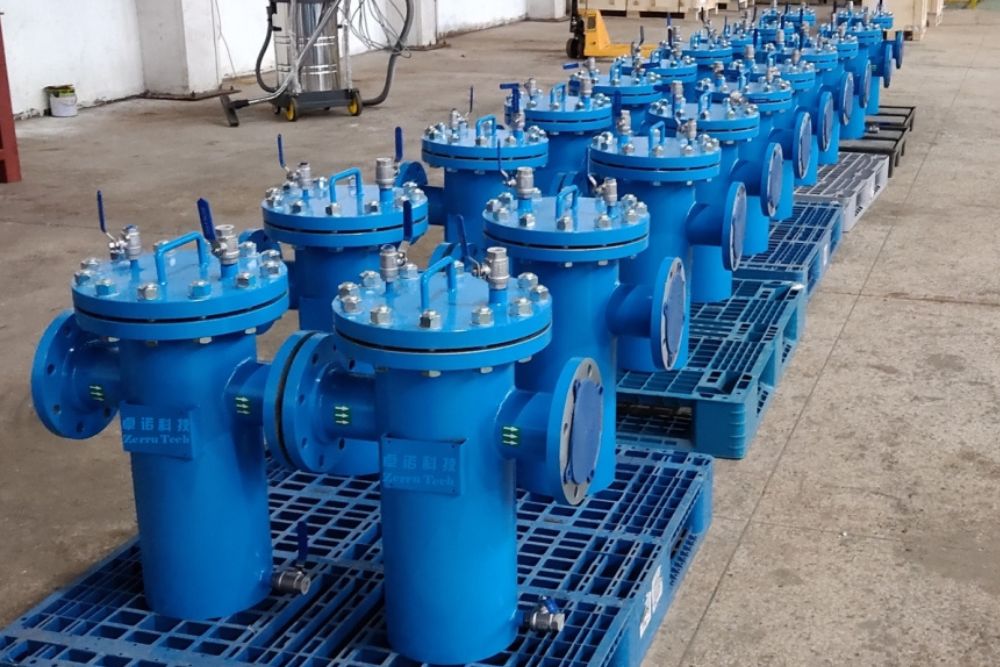
Funny thing about experience – after years in industry, I finally noticed how small things mess everything up most. That job in Gujarat sticks out clearly, though, where a big cooling system for a chemical site had everyone stretched thin. Pressure climbed daily, schedules shrank like old denim, while buyers hunted pennies wherever they could find them.
They decided to go for a “budget-friendly” solution in terms of filtration units. On the surface, it seemed to be a good fit. It had the correct flange sizes and was nicely painted. However, after just three months of operation, at a time of peak production, the internal basket gave way to a slight pressure surge. Debris went around the filter, damaged a high-end centrifugal pump, and we were out of operation for four days. The few thousand rupees “saved” was the price we paid for lakhs of repairs and lost time.
It was then I realized my “aha” moment. Purchasing a metal item is not the only thing you are doing, you are also buying the safety of your entire system so that it won’t fail due to a shortcut. Being on the hunt for a Basket Strainer Manufacturer means you are seeking a partner who can offer reliable products and services. Honestly, the Indian market is brimming with options, some are world-class, while… Some others are just bending pipes in a garage.
This booklet is all about how to ignore unnecessary marketing noise and focus on what really counts. We will highlight the features that make a difference, the technical “non-negotiables, ” and the manufacturer evaluation process to avoid getting into trouble with water on the floor and an angry factory manager.
- The Anatomy of Quality Why Good Enough Falls Short
Ahead of diving into where things come from, there’s something off about how people see strainers. They treat them like just another piece stuck in a line. Sure, they seem basic at first glance. Yet high-pressure factories play tricks – what seems plain often wraps tricky design beneath.
The Housing: More Than Just a Shell
The start of a good basket strainer is the casting or fabrication of a body. In India, iron cast in sand molds can be found along with stainless steel made by high-grade investment casting. A first-rate Basket Strainer Manufacturer will make the thickness of a wall the top priority. When the walls are uneven, stress concentrations result. Stress points become cracks under thermal cycling, which is a recurring theme in many Indian processing plants.
The Basket: The Hero of the Story
This is the spot where the wonder occurs (and also the breakdown). A delicate basket is an explosive time bomb. So, you should look out for:
- Reinforced Frames: Has the basket heavy-duty handle and the longitudinal seam been reinforced?
- Area Ratio: A brilliant solution has a large “open area ratio”. Preferably, the total area of holes in the basket should be 6 times at least the area of the inlet pipe. Consequently, even if the basket becomes cramped with the waste, the pressure drop will not drastically increase and pumps won’t be starved of the flow.
2. Material Science: Beyond “Stainless vs. Carbon”
India’s weather can be harsh, humidity, salt spray in the marine areas, and frequently industrial water which is less than pure. In order to select a Basket Strainer Manufacturer, one should request the Material Test Reports (MTRs).
- Carbon Steel: It is perfect for oil and non-corrosive fluids, but it has to be treated with a good epoxy coating.
- Duplex Stainless Steel: Should you be working with seawater or high chloride level environments (such as desalination or power plants located at the coast), then the conventional 316 will not be sufficient. You have to use more resistant materials.
- Internal Lining: In certain cases, the finest decision is not to use a solid exotic metal but to opt for a carbon steel body which is lined with a high-quality material such as PTFE or Ebonite. Doing the right thing is more than just splashing money around.
3. The “Secret Sauce” of Ease-of-Use: Cover Designs
We cannot meet our expectations without talking to the guy in the shoes who is responsible for cleaning the thing at 3:00 AM. Besides, if it takes forty minutes for him to pool out sixteen bolts just to empty some sand, I can guarantee that he would dislike that strainer. And the thing with people disliking equipment is that they tend to take shortcuts.
Quick-Opening Covers
– A good Basket Strainer Manufacturer should be able to offer different closure options;
- Bolted Covers: These are the conventional ones. They do not have any issues and are very affordable, however, they are time-consuming. Their use is recommended when the cleaning of the system is planned once in a while.
- Yoke Covers: The unit is equipped with a single T-bolt or handwheel. They are very handy, so you can go through the operation without the use of any tools. This is a great improvement for pumps that work in dirty stuff that is present in great quantities.
- Swing-Bolt Covers: A compromise between the two: secure like a bolted cover but much faster to pivot out of the way.
Pro-Tip: The seal should be double-checked every time. It will mainly be the O-ring seal that is a better seal as compared to a flat gasket for quick opening covers because in most cases the latter one gets misaligned or pinched during hurried re-assembly.
4. Technical Specs: The Non-Negotiables
And thus, this is the moment when you don your engineer’s cap. Do not allow a salesman to take your attention away through babbling about “lifetime support” when you have not even checked the numbers yet.
Pressure Ratings and Standards
In India, the BIS (Bureau of Indian Standards) is a minimum requirement, however for B2B businesses, which operate extensively global-grade wise, the customers shall expect ASME B16.5 (flanges) and ASME B16.34 (pressure/temperature ratings) certifications. If a manufacturer does not know the pressure class (such as Class 150, 300, or 600) or hesitates when you volunteer hydro-testing, then you simply have to get out of there.
Differential Pressure Monitoring
Measurement is management, isn’t it? A top-quality filter element has to allow for pressure gauges installation on both the inlet and outlet via tapped ports. Not only that, however, the manufacturer should be asked to supply a differential pressure (DP) gauge or even a DP switch as well.
- The Reasoning: The basket becomes clogged, the pressure on the outlet line decreases. At a certain level of $ \Delta P $, the alarm is triggered. This way, the “collapsed basket” scenario is avoided.
- Vetting the Manufacturer Beyond the Brochure
Looks impressive on paper, doesn’t it? Surprise – the real test comes later. Across India’s industries, you’ll find something odd: sleek automated plants sitting next to small workshops running gear older than most workers. Reality never fits neatly into brochures.
Manufacturing and Research Development Strength
What really matters? Someone ready to think differently. Besides everything else, creativity shapes how problems get solved.
- Testing inside the company. Is there equipment for water pressure checks? Are welds examined using colored liquid methods? Top-tier makers of basket strainers do more than talk – they show results, backed by official test records approved by NABL.
- Picture this. The company builds models in three dimensions to shape how things look. Instead of guessing, they run digital tests showing how liquids move through the filter. Because of those tests, hidden spots where gunk piles up get spotted early. That means less clogging over time. Thanks to smart software, the device stays cleaner on its own, without extra help. Long stretches pass before maintenance shows up on the radar.
The Scale and Logistics Question
Can they do the job for you? I’ve witnessed a tiny workshop that took on a huge contract for a refinery and then after the order had been laid down, the logistics practically collapsed.
- Past Work: Request testimonials. Their having been suppliers to ONGC, Reliance, or BHEL is an indication that they have the quality control systems required in order to handle very high-profile projects.
- Supply Chain Robustness: Where do they source their raw materials? With metals that are global priced and adjusted at times being so unstable nowadays, a manufacturer managing its inventory helps prevent the customer from facing a “price adjustment” during production.
6. The Price vs. Value Paradox
After all, budgets are real and so is the need for the lack of waste of money. Still, Indian market’s “unorganized sector” can provide 30% cheaper prices than those of the established brand, which are tempting. I undoubtedly understand the temptation.
The Hidden Costs of “Cheap”
So when the price is considerably low, the money used for one part of the product, generally must be taken from another. Mostly, it is:
- Castings for Thinner Parts: The product may be able to withstand pressure right now, but after three years of erosion, what then?
- Mesh of Lower Grade: Substitution of 316 by 304 stainless or usage of thinner wire gauge which vibrates and eventually breaks due to fatigue
- Poor Surface Finish: Rough internal surfaces trap bacteria and debris, leading to faster clogging and potential “pitting” corrosion
A heavy strainer often means solid build. Picture two models built alike – same job, same materials on paper – but one feels lighter. What’s the difference? It speaks volumes. Weight can reveal shortcuts hidden beneath specs. Get numbers when comparing. Push for exact figures from suppliers. One comes in at 45 kilograms, another at 32. The drop isn’t magic – its compromise. Less mass might mean thinner walls, weaker parts. Trust what the scale shows. Details hide in metal, not brochures.
- Emerging Opportunities: The Future of Filtration
The Indian industrial ecosystem is changing. The government is accelerating the development of the Green Hydrogen sector, and the sun, as well as the EV sectors, are growing in size enormously, and all of these result in there being quite changed filtration requirements.
High-Efficiency Filtration
There is a clear trend in the usage of finer mesh sizes. In order to effectively protect the sensitive nozzles and heat exchangers with a couple of micron filtration, the basket has to allow for a much higher level of engineering to prevent the basket from plugging instantly.
Smart Strainers
We are talking here about the era of Industry 4.0. What if you were able to remotely check the status of strainers of five different plants using only a phone? Hence, the practical incorporation of IoT sensors by a number of forward-looking manufacturers is no more just an idea of sci-fi; it is fast becoming the standard of world-class operations.
- The Long Game: Partnership and Support
Strainers are not “buy and forget” items. They not only support your plant’s circulation system, they are like a part of the same.
After-Sales Support
What if you come to need a replacement basket in three years? Or a new set of O-rings?
- Standardization: Choose a Basket Strainer Manufacturer that uses standardized parts. You don’t want to be held hostage by a company that uses a “unique” basket size that no one else makes.
- Technical Guidance: A good supplier will help you size the strainer correctly. They should ask about your fluid’s viscosity, specific gravity, and the maximum allowable pressure drop. If they just ask “What pipe size?”, they aren’t engineers, they’re order-takers.
Conclusion
This then – the Indian market – lives between extremes. Right alongside brilliant innovation sits plenty of showy nonsense. One moment you see sharp precision, next thing there’s flash hiding thin substance
One less dollar spent now might cost plenty later. That bargain filter? It fits this year’s numbers fine – yet could mean headaches when things go wrong down the line.
A good fit means they treat your downtime like their own problem. Strange as it may seem, how well things run later ties directly to what parts get picked right now.
Maybe I could help with that technical questionnaire, perhaps even the RFQ layout when checking basket strainer makers. Just a thought.




Post Comment