Top Benefits of Using Polishing Pads for a Perfect Finish
Have you ever spent hours trying to buff out scratches on your car, only to end up with disappointing results? Or perhaps you’ve wondered why professional detailers achieve that incredible mirror-like shine while your DIY efforts fall flat? The secret often lies in one simple tool that many people overlook: the humble polishing pad.
Whether you’re a weekend warrior tackling your pride and joy in the driveway or a seasoned professional working on boats and vehicles, understanding polishing pads can transform your results. These unassuming circular discs are the unsung heroes of surface restoration, bridging the gap between your polishing compound and the surface you’re working on. Without the right pad, even the most expensive polish won’t deliver the finish you’re after.
In this guide, we’ll explore everything you need to know about polishing pads. You’ll discover the different types available, learn which pad suits your specific project, and understand why choosing the right one matters more than you might think. Plus, we’ll cover common mistakes to avoid and share tips for getting that perfect finish every time. Ready to level up your polishing game? Let’s get stuck into it.
What Are Polishing Pads and How Do They Work?
Polishing pads are specialised attachments designed to work with rotary or dual-action polishers. They create a consistent interface between your polishing compound and the surface being treated. Think of them as the middleman that ensures even distribution of product while providing the right amount of cutting or finishing action.
The magic happens through friction and compound distribution. As the pad rotates, it spreads the polish evenly across the surface while the pad’s material either cuts away imperfections or refines the finish to a brilliant shine. Different pad materials and textures achieve different results, which is why understanding your options is crucial.
Understanding the Different Types of Polishing Pads
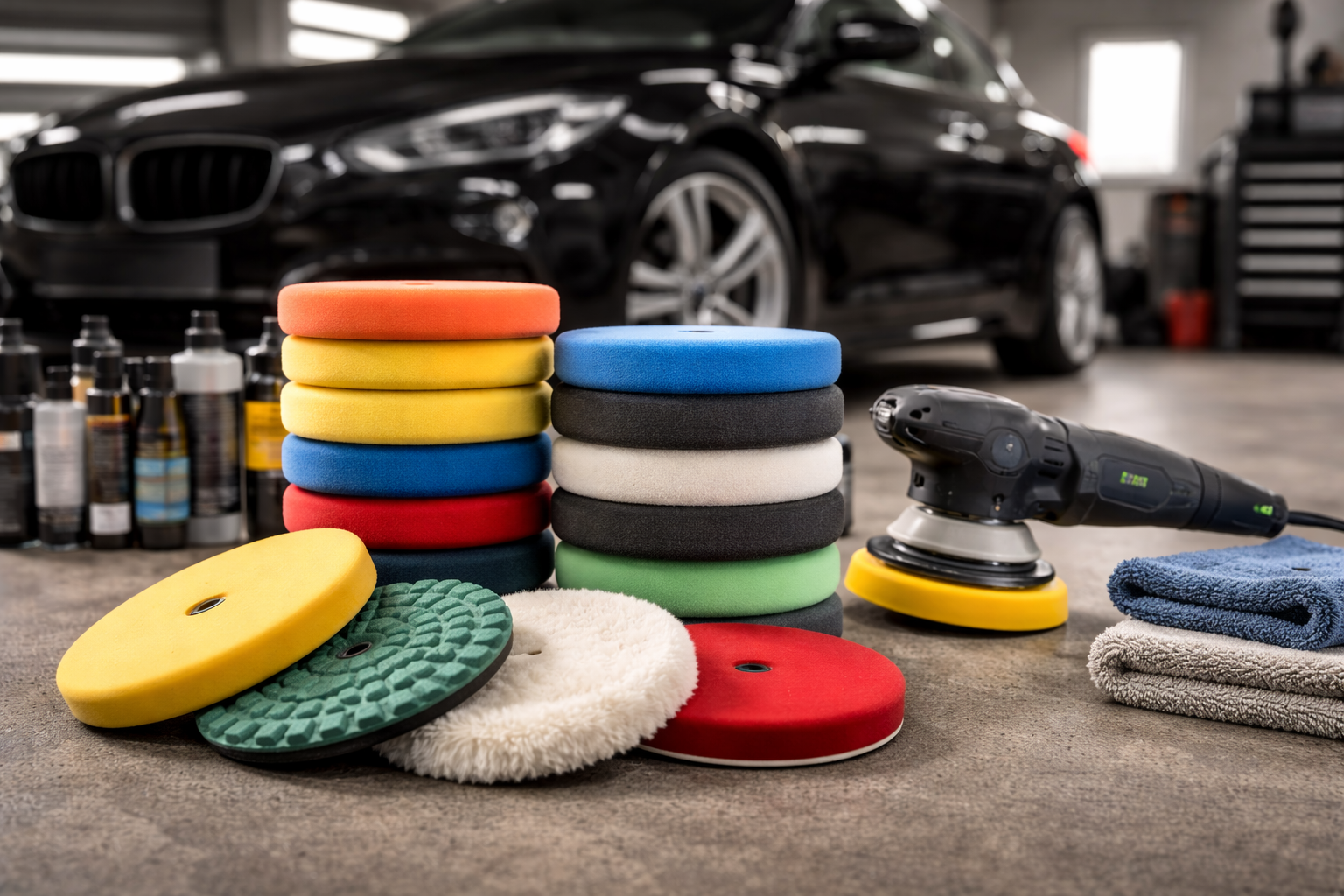
Polishing pads come in several varieties, each engineered for specific tasks. Cutting pads feature firmer construction and more aggressive textures, making them ideal for removing deeper scratches and oxidation. Polishing pads sit in the middle ground, tackling light imperfections while starting to build shine. Finishing pads are the softest of the bunch, designed purely for creating that final glossy appearance.
Beyond their firmness, pads also vary in their surface patterns. Some feature flat faces for general work, while others incorporate dimples, grooves, or hexagonal patterns. These designs help with heat dissipation and compound distribution, preventing the pad from clogging up during extended polishing sessions.
Foam vs Wool vs Microfibre: Which Polishing Pad Should You Choose?
Foam pads remain the most popular choice for both enthusiasts and professionals. They’re versatile, consistent, and available in various densities for different tasks. Foam generates less heat than other materials and provides excellent control, making it perfect for beginners.
Wool pads excel at heavy cutting work. They remove material quickly and tackle severe oxidation or deep scratches that foam simply can’t handle. However, they require more skill to use effectively and can leave behind micro-marring that needs addressing with a finishing pad.
Microfibre pads offer a middle ground between foam and wool. They cut faster than foam while generating less heat than wool. Many detailers love them for one-step corrections where time is limited but results still matter.
Top Benefits of Using Polishing Pads
Achieving a Scratch-Free, Mirror-Like Finish
The primary benefit of quality polishing pads is their ability to create stunning finishes that hand polishing simply cannot match. When paired with the correct compound, a good pad systematically levels the surface, removing imperfections while leaving behind a smooth, reflective result.
Machine polishing with proper pads eliminates the inconsistency of hand application. The pad maintains constant pressure and motion, ensuring every section receives identical treatment. This uniformity is what separates amateur results from professional-quality finishes.
Saving Time and Effort Compared to Hand Polishing
Let’s be honest—hand polishing is exhausting. What takes hours by hand can be accomplished in minutes with a polisher and appropriate pad. Your arms will thank you, and you’ll actually enjoy the process rather than dreading it.
Beyond physical effort, polishing pads dramatically reduce project completion times. A full vehicle correction that might take an entire weekend by hand can be knocked out in a few hours with the right equipment. This efficiency makes regular maintenance far more achievable for busy people.
Extending the Life of Your Paintwork and Surfaces
Regular polishing with quality pads does more than make surfaces look good—it actively protects them. By removing contaminants and smoothing the surface, you’re creating an ideal foundation for waxes and sealants to bond properly.
Smooth, well-polished surfaces also resist dirt accumulation and are easier to clean. This means less aggressive washing over time, which further protects your paintwork from unnecessary wear. It’s a virtuous cycle that pays dividends year after year.
Cost-Effective Results for DIY Enthusiasts and Professionals
Professional detailing services can cost hundreds of dollars per session. Investing in a decent polisher and a set of quality pads pays for itself after just one or two projects. From there, maintaining your surfaces becomes incredibly affordable.
For professionals, high-quality pads improve efficiency and results, leading to happier customers and more referrals. The initial investment in premium pads returns dividends through faster job completion and superior outcomes that build your reputation.
Do Polishing Pads Really Make a Difference?
Before and After: Real Results You Can Expect
The transformation possible with proper polishing pads genuinely surprises most first-timers. Swirl marks that seemed permanent simply vanish. Dull, oxidised paint regains its original depth and clarity. The difference between before and after often looks like comparing a ten-year-old vehicle to something fresh from the showroom.
Importantly, these results are achievable by regular people, not just trained professionals. With a bit of practice and the right pads, anyone can dramatically improve their vehicle’s appearance.
Why the Right Pad Matters More Than You Think
Using the wrong pad for your task is like using a sledgehammer to hang a picture frame—technically possible, but far from ideal. An overly aggressive pad on delicate paintwork can cause damage, while a soft finishing pad won’t touch deeper scratches no matter how long you spend.
The pad is arguably more important than the compound you choose. A quality pad with average compound will outperform a premium compound with a cheap, unsuitable pad every single time.
How to Choose the Best Polishing Pad for Your Project
What Polishing Pad Is Best for Removing Scratches?
For light scratches and swirl marks, a medium-cut foam pad paired with a polishing compound handles most situations beautifully. These pads offer enough bite to level minor imperfections without risking damage to clear coat.
Deeper scratches require more aggressive approaches. Start with a cutting pad and compound, then follow up with progressively finer pads until you achieve the desired finish. This multi-step process sounds tedious but delivers superior results.
Matching Pad Firmness to Your Polishing Compound
Pad and compound work as a team—mismatching them undermines your efforts. Heavy cutting compounds need firmer pads that can handle the aggressive abrasives. Finishing polishes require soft pads that won’t introduce new scratches while creating maximum gloss.
When in doubt, check the manufacturer’s recommendations. Most compound brands suggest compatible pad types, taking the guesswork out of the equation.
Selecting Pads for Cars, Boats, and Other Surfaces
Automotive paintwork typically responds well to foam pads across the correction range. Modern clear coats are relatively forgiving but still benefit from matched pad selection.
Marine applications often require more aggressive initial cutting due to severe oxidation from salt and sun exposure. Wool or microfibre cutting pads shine here, followed by foam finishing pads.
Can You Use Polishing Pads on All Surfaces?
Automotive Applications
Polishing pads are perfect for vehicle paintwork, including clear coats, single-stage paints, and even headlight restoration. Different pad types address various automotive polishing needs, from heavy correction to final finishing.
Marine and Fibreglass Polishing
Boats and fibreglass surfaces benefit enormously from machine polishing. The gelcoat finishes common on watercraft respond beautifully to proper pad selection, restoring faded surfaces to like-new condition.
Household and Commercial Uses
Beyond vehicles, polishing pads work wonders on countertops, metal fixtures, and even furniture. Smaller pads fit into tight spaces, making detailed work accessible for various household projects.
How Often Should You Replace Your Polishing Pads?
Pads don’t last forever. Look for signs of deterioration like torn foam, flattened pile, or glazed surfaces that no longer hold compound effectively. Most enthusiasts replace pads every few projects, while professionals working daily might go through them weekly.
Proper cleaning extends pad life significantly. Rinse thoroughly after each use and allow complete drying before storage.
Common Mistakes to Avoid When Using Polishing Pads
Applying too much pressure tops the list of beginner errors. Let the pad and compound do the work—excessive force generates heat and can burn through paint. Starting with pads that are too aggressive also causes problems; always begin with the least aggressive option that will accomplish your goal.
Neglecting pad cleaning during extended sessions leads to compound buildup and reduced effectiveness. Take breaks to clean your pad, especially when switching between compounds or working on large surfaces.
Getting the Perfect Finish Every Time
Polishing pads might seem like simple accessories, but they’re genuinely essential for achieving professional-quality results. From saving time and effort to protecting your surfaces long-term, the benefits of using the right pad for each job are undeniable.
Remember that matching your pad to both your compound and your specific task makes all the difference. Don’t rush the selection process, and don’t be afraid to experiment with different combinations until you find what works best for your situation.
Whether you’re restoring a classic car, maintaining your daily driver, or tackling a boat that’s seen better days, quality polishing pads are your ticket to stunning results. Invest in a decent set, learn the basics of pad selection, and you’ll be amazed at what you can achieve. Your surfaces will thank you—and so will everyone who sees that perfect, mirror-like finish.